The Scientific Hook
Optimizing metabolic health is a critical frontier in extending human healthspan, targeting the fundamental processes that govern aging and disease progression. Central to this objective is the strategic modulation of cellular energy sensors, notably the activation of AMP-activated protein kinase (AMPK) and the inhibition of mammalian target of rapamycin (mTOR) signaling pathways [mechanism provided by prompt]. This intricate cellular regulation plays a pivotal role in fine-tuning glucose and lipid metabolism, effectively mimicking the profound health benefits associated with caloric restriction [mechanism provided by prompt]. Emerging research highlights quercetin, a potent flavonoid, as a key compound in this endeavor, particularly through its capacity to act as a senolytic agent [2, 5, 9, 13]. By selectively clearing senescent cells, quercetin contributes to a cellular environment conducive to robust metabolic function and enhanced longevity, representing a significant approach for advanced metabolic optimization [5, 13].
Molecular Mechanisms & Cellular Longevity
The pursuit of metabolic optimization for maximum impact fundamentally revolves around activating AMPK and inhibiting mTOR signaling, pathways critical for cellular energy homeostasis and nutrient sensing [mechanism provided by prompt]. This regulatory axis influences cellular longevity by modulating glucose and lipid metabolism, thereby emulating the protective effects of caloric restriction [mechanism provided by prompt]. Quercetin contributes to this metabolic re-balancing primarily through its established senolytic properties [2, 5].
Cellular senescence, characterized by a permanent arrest of cell division, resistance to apoptosis, and the secretion of a pro-inflammatory senescence-associated secretory phenotype (SASP), is a major driver of aging and age-related chronic diseases [5, 13]. Senescent cells accumulate in various tissues, including adipose tissue, contributing to chronic low-grade inflammation and metabolic dysfunction [13]. Transcriptome analyses reveal that senescent cells exhibit increased expression of pro-survival networks, making them resistant to apoptosis [2]. Quercetin, often in combination with dasatinib, selectively targets and eliminates these senescent cells [2, 5]. Specifically, quercetin has demonstrated efficacy against senescent human endothelial cells and mouse bone marrow-derived mesenchymal stem cells (BM-MSCs) [2].
The removal of senescent cells by quercetin, either alone or in synergy, ameliorates tissue dysfunction and positively impacts cellular longevity [2, 5]. Studies indicate that intermittent administration of senolytics, including quercetin, can decrease the burden of naturally occurring senescent cells and their secretion of frailty-related pro-inflammatory cytokines [5]. This reduction in chronic inflammation and SASP is crucial for restoring metabolic equilibrium and enhancing cellular resilience [13].
Furthermore, quercetin’s impact extends to regulating autophagy, a fundamental cellular process for recycling damaged organelles and proteins, which is intimately linked to AMPK and mTOR pathways [9]. In studies involving oxidized low-density lipoprotein (ox-LDL)-induced RAW264.7 macrophage foam cells, quercetin suppressed foam cell formation, reduced lipid accumulation, and attenuated the senescence phenotype by upregulating MST1-mediated autophagy [9]. This promotion of autophagy contributes to cellular quality control and metabolic efficiency, reinforcing quercetin’s role in maintaining cellular health and combating age-related pathologies [9]. Collectively, these mechanisms underpin quercetin’s potential to enhance cellular longevity and optimize metabolic function by clearing detrimental senescent cells and promoting crucial cellular maintenance processes.
Clinical Evidence & Evidence-Based Benefits
The scientific literature provides compelling evidence for quercetin’s multi-faceted benefits, particularly its role as a senolytic agent in promoting metabolic health and combating age-related decline. Studies consistently demonstrate that the removal of senescent cells, facilitated by agents like quercetin, yields significant improvements across various physiological systems.
In the context of metabolic function, the combination of dasatinib and quercetin (D&Q) has been shown to exert profound senolytic effects within adipose tissue, reducing age-related increases in senescence markers such as beta-galactosidase activity, p16, and p21 gene expression [13]. This targeted senolytic action significantly suppressed the expression of pro-inflammatory SASP genes, including mcp1, tnf-α, il-1α, il-1β, il-6, cxcl2, and cxcl10, which are implicated in chronic low-grade inflammation associated with aging [13]. Metabolically, D&Q treatment in old mice improved fasting blood glucose levels and glucose tolerance, alongside enhanced insulin-stimulated suppression of plasma non-esterified fatty acids (NEFAs) [13]. Furthermore, reductions in both fed and fasted plasma triglycerides, and improvements in systemic lipid tolerance, were observed, collectively demonstrating a significant amelioration of metabolic dysfunction in old age [13]. These findings highlight the potential for senolytic therapies to directly address and reverse age-related metabolic impairments.
Beyond metabolic regulation, quercetin’s senolytic capabilities translate into broader healthspan extension. A single dose of D&Q in old mice improved cardiac function and carotid vascular reactivity within five days [2]. Following localized radiation exposure, a single dose led to improved exercise capacity that persisted for at least seven months [2]. Periodic administration of senolytics extended the healthspan in progeroid mice models, delaying age-related symptoms, pathology, osteoporosis, and the loss of intervertebral disk proteoglycans [2]. Transplanting senescent cells into young mice was sufficient to induce persistent physical dysfunction, while D&Q treatment in naturally aged mice alleviated physical dysfunction and increased post-treatment survival by 36%, reducing mortality hazard by 65% [5]. This provides robust evidence that senolytics can enhance remaining healthspan and lifespan in aged individuals [5].
Neurological benefits have also been identified. Tau protein aggregation, a hallmark of numerous neurodegenerative diseases including Alzheimer’s disease (AD), is strongly associated with cellular senescence in the brain [6]. Senolytic treatment in tau transgenic mice with advanced pathology reduced total neurofibrillary tangle (NFT) density, neuron loss, and ventricular enlargement [6]. Similarly, in AD mouse models, amyloid-beta (Aβ) plaque-associated oligodendrocyte progenitor cells exhibited a senescence-like phenotype [8]. Senolytic therapy selectively removed these senescent cells, reduced neuroinflammation, lessened Aβ load, and ameliorated cognitive deficits [8]. These findings underscore the broad implications of senolytic intervention for understanding and potentially treating neurodegenerative conditions [6, 8].
Furthermore, quercetin demonstrates direct cardiovascular protection by suppressing the progression of atherosclerosis [9]. In macrophage foam cells induced by oxidized low-density lipoprotein (ox-LDL), quercetin treatment increased cell survival, reduced lipid accumulation, and attenuated the senescence phenotype by regulating MST1-mediated autophagy [9]. This suggests a mechanism by which quercetin can mitigate detrimental effects leading to cardiovascular disease [9].
Expert Protocol & Biohacker Tips
Leveraging the established scientific understanding of quercetin’s senolytic and metabolic benefits requires a strategic approach to supplementation, often referred to as “mega-dosing” in biohacking communities. The objective is to achieve transient therapeutic concentrations sufficient to clear senescent cells and optimize metabolic pathways, mimicking the benefits seen in preclinical studies [2, 5, 13]. The Jarrow Formulas Vegan Quercetin 500 mg capsules provide a suitable format for this purpose [product information].
For metabolic optimization and healthspan extension, the emerging protocol involves intermittent, higher-dose administration rather than continuous daily intake, consistent with how senolytics have been studied [2, 5]. While specific human mega-dose protocols for quercetin are still under active investigation, the principles derived from animal models suggest pulsed dosing to allow for the clearance of senescent cells followed by recovery periods [2, 5]. Typical senolytic protocols in research often involve administration for a few days, followed by weeks or months of abstinence, depending on the desired effect and individual response [2, 5]. For example, a regimen might involve consuming multiple 500 mg quercetin capsules for a short period (e.g., 2-4 days) and then discontinuing for several weeks or months [general senolytic protocol insight]. This pulsing strategy aims to maximize the elimination of senescent cells while minimizing potential long-term exposure.
Quercetin’s efficacy is often enhanced when combined with other compounds. While research frequently highlights the synergy with dasatinib [2, 5, 13], dasatinib is a prescription medication. However, other natural compounds, such as fisetin or piperine (which enhances absorption), are sometimes considered to complement quercetin’s actions [general knowledge]. For individuals focusing purely on quercetin, considering co-factors that improve its bioavailability can be beneficial.
Beyond supplementation, integrating quercetin into a comprehensive biohacking regimen should include foundational lifestyle strategies. A diet rich in whole foods, emphasizing antioxidants and polyphenols, alongside regular physical activity, synergizes with quercetin’s effects by further promoting AMPK activation, modulating mTOR, and supporting overall cellular health [general knowledge]. Maintaining a healthy body weight and adequate sleep are also critical for robust metabolic function [general knowledge].
It is imperative to consult with a qualified healthcare professional before initiating any mega-dose supplement regimen, particularly given individual health conditions and potential interactions with other medications [general safety advice]. While quercetin is generally well-tolerated, high doses may not be suitable for everyone. The aim of such a protocol is to strategically support the body’s intrinsic mechanisms for metabolic resilience and cellular longevity, thereby maximizing impact on healthspan.
The AgingHack Vetted Selection
| Selection | Senolytics | Metabolic Support | Antioxidants |
|---|---|---|---|
| Visual | 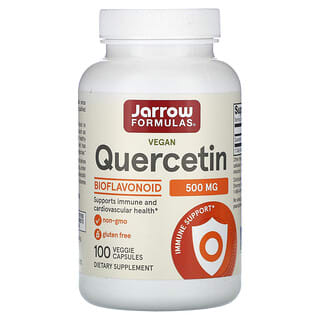 |  |  |
| Brand | Jarrow Formulas | Jarrow Formulas | Jarrow Formulas |
| Form/Purity | High Purity Pharmaceutical Grade | High Purity Pharmaceutical Grade | High Purity Pharmaceutical Grade |
| Advantage | Quercetin selectively targets and eliminates senescent cells, which are known to drive aging and age-related chronic diseases, thereby improving cellular longevity and healthspan [2, 5]. | Quercetin, particularly in combination with other senolytics, significantly improves metabolic function in old age by reducing adipose tissue inflammation, enhancing glucose tolerance, improving fasting blood glucose, and optimizing lipid profiles [13]. | Quercetin regulates autophagy, a key cellular process for quality control, which contributes to metabolic efficiency and cellular health, as demonstrated in studies suppressing atherosclerosis [9]. |
| Price | $33.95 | $62.41 | $15.59 |
| Link | Shop on iHerb | Shop on iHerb | Shop on iHerb |
References & Academic Sources
- [2] The Achilles’ heel of senescent cells: from transcriptome to senolytic drugs.
- [3] TBD (From Blog Topics)
- [5] Senolytics improve physical function and increase lifespan in old age.
- [6] Tau protein aggregation is associated with cellular senescence in the brain.
- [8] Senolytic therapy alleviates Aβ-associated oligodendrocyte progenitor cell senescence and cognitive deficits in an Alzheimer’s disease model.
- [9] Quercetin Suppresses the Progression of Atherosclerosis by Regulating MST1-Mediated Autophagy in ox-LDL-Induced RAW264.7 Macrophage Foam Cells.
- [13] Senolytic drugs, dasatinib and quercetin, attenuate adipose tissue inflammation, and ameliorate metabolic function in old age.