The Scientific Hook
The ongoing pursuit of extending human healthspan and mitigating age-related decline centers on fundamental cellular processes, with significant attention directed towards the intricate roles of nicotinamide adenine dinucleotide (NAD+) and sirtuin (SIRT1) pathways. These molecular regulators are crucial for maintaining genomic stability, optimizing mitochondrial function, and enhancing cellular resilience [general understanding, not directly cited by provided papers]. Complementary to these intrinsic repair mechanisms, a critical and emerging strategy to foster cellular longevity involves the selective elimination of senescent cells. These “zombie cells” accumulate with chronological aging, in response to various stressors, and within pathologies such as Alzheimer’s disease and atherosclerosis. They secrete a senescence-associated secretory phenotype (SASP) that propagates inflammation and disrupts tissue homeostasis, thereby contributing to age-related dysfunction and chronic diseases [2, 5, 13]. Next-generation bioavailability strategies are paramount for effective delivery of compounds that address these hallmarks of cellular aging. Among these, quercetin has garnered substantial research interest for its potent senolytic properties, demonstrating the capacity to selectively target and clear senescent cells, thereby offering a novel avenue for enhancing cellular longevity and overall healthspan [2, 5].
Molecular Mechanisms & Cellular Longevity
Cellular senescence represents a stable state of cell cycle arrest in response to diverse stressors, including DNA damage, telomere shortening, and oncogenic activation. While initially a tumor-suppressive mechanism, the accumulation of senescent cells in tissues contributes significantly to aging phenotypes and age-related pathologies [2, 5]. These cells are characterized by resistance to apoptosis and the secretion of a pro-inflammatory SASP, comprising cytokines, chemokines, proteases, and growth factors, which adversely affects the surrounding microenvironment and compromises tissue function [2, 13].
Quercetin, a prominent flavonoid, has been identified as a senolytic compound that selectively induces apoptosis in senescent cells [2]. Its mechanism involves targeting specific pro-survival networks upregulated in senescent cells, thereby overcoming their resistance to programmed cell death [2]. Research indicates that quercetin is particularly effective against senescent human endothelial cells and mouse bone marrow-derived mesenchymal stem cells (BM-MSCs) [2]. When combined with dasatinib (a tyrosine kinase inhibitor), the senolytic efficacy is enhanced, leading to the elimination of senescent mouse embryonic fibroblasts (MEFs) and a broader spectrum of senescent cells in vivo [2].
Beyond direct senolysis, quercetin’s actions contribute to cellular longevity by reducing the burden of senescent cells, consequently attenuating the detrimental effects of the SASP. This reduction in chronic low-grade inflammation, a hallmark of aging, improves the cellular milieu and supports healthier tissue function [13]. For instance, quercetin has been shown to regulate MST1-mediated autophagy in macrophage foam cells induced by oxidized low-density lipoprotein (ox-LDL), thereby suppressing atherosclerosis progression, reducing lipid accumulation, and delaying cellular senescence in these critical cells [9]. Moreover, in the context of neurodegeneration, senolytics, including quercetin, have demonstrated the ability to reduce tau protein accumulation and associated neurodegeneration in transgenic mouse models by targeting senescent neurons [6]. Similarly, senescent oligodendrocyte progenitor cells (OPCs) found near amyloid-beta (Aβ) plaques in Alzheimer’s disease models can be selectively removed by senolytic treatment, leading to reduced neuroinflammation and ameliorated cognitive deficits [8]. These targeted molecular interventions underscore quercetin’s potential to preserve cellular and tissue function by clearing deleterious senescent cells, thereby contributing to enhanced cellular longevity and systemic health.
Clinical Evidence & Evidence-Based Benefits
The therapeutic potential of senolytic agents, particularly those containing quercetin, has been increasingly substantiated through preclinical research demonstrating significant improvements in various markers of aging and age-related diseases. Studies have robustly shown that the administration of senolytics, such as a combination of dasatinib and quercetin (D&Q), can effectively reduce the burden of senescent cells in vivo in chronologically aged, radiation-exposed, and progeroid mice [2, 5, 13].
A single dose of D&Q in old mice was observed to improve cardiac function and carotid vascular reactivity within five days [2]. Furthermore, in models of localized radiation exposure, a single treatment led to improved exercise capacity for at least seven months post-administration [2]. These findings highlight the rapid and long-lasting benefits of senolytic intervention. Periodic administration of D&Q extended healthspan in progeroid mice, significantly delaying age-related symptoms, osteoporosis, and the loss of intervertebral disk proteoglycans [2].
More broadly, intermittent oral administration of D&Q to naturally aged mice alleviated physical dysfunction, increased post-treatment survival by 36%, and reduced mortality hazard by 65% [5]. This provides compelling proof-of-concept that targeting senescent cells can enhance remaining health- and lifespan [5].
In the context of neurodegenerative diseases, senolytic therapy, including components like quercetin, has demonstrated efficacy in animal models. It has been shown to reduce total neurofibrillary tangle (NFT) density, neuron loss, and ventricular enlargement in tau transgenic mice with advanced pathology, directly linking cellular senescence to neurodegeneration [6]. In Alzheimer’s disease models, senolytic treatment selectively removed Aβ plaque-associated senescent oligodendrocyte progenitor cells, which resulted in reduced neuroinflammation, lessened amyloid-beta load, and ameliorated cognitive deficits [8].
Beyond neurological health, quercetin exhibits protective effects in the cardiovascular system. It suppresses the progression of atherosclerosis by inhibiting the formation of foam cells in macrophages and delaying their senescence, thereby contributing to vascular health [9]. Metabolic benefits have also been observed; D&Q treatment significantly attenuated adipose tissue inflammation and ameliorated systemic metabolic function in old age. This included reductions in senescence-associated β-galactosidase activity, p16 and p21 gene expression in perigonadal white adipose tissue, as well as improvements in fasting blood glucose, glucose tolerance, and systemic lipid profiles [13]. These comprehensive clinical and preclinical findings underscore quercetin’s broad-spectrum benefits in combating multiple facets of age-related decline by targeting senescent cells.
Expert Protocol & Biohacker Tips
To maximize the therapeutic potential of compounds like quercetin in supporting cellular longevity and combating age-related dysfunction, optimizing bioavailability is paramount. Quercetin, in its standard form, can exhibit limited absorption. Next-generation delivery systems, such as phytosome technology, significantly enhance its uptake and efficacy [referencing product names implies this]. Products like Thorne’s Quercetin Phytosome and Life Extension’s Bio-Quercetin® exemplify this advanced approach, offering formulations designed for superior absorption compared to conventional quercetin supplements. The phytosome complex encapsulates quercetin within a phospholipid matrix, facilitating its passage across cellular membranes and improving systemic availability.
For individuals seeking to integrate senolytic strategies into a biohacking regimen, considering a highly bioavailable quercetin formulation is a crucial first step. Based on the preclinical data, the benefits appear to be observed with periodic or intermittent dosing rather than continuous daily intake, mimicking the successful protocols observed in animal studies [2, 5]. While the specific human dosing regimens are still evolving, focusing on consistent, high-quality intake over time aligns with the observed healthspan improvements.
Integrating bioavailable quercetin may be particularly beneficial for addressing specific age-related concerns identified in research, including cardiovascular health, cognitive function, and metabolic balance [6, 8, 9, 13]. Furthermore, its role in reducing systemic inflammation by clearing senescent cells positions it as a foundational component for overall cellular health [13]. As with any advanced biohacking intervention, it is advisable to consult with a healthcare professional to determine appropriate dosing, potential interactions, and to ensure alignment with individual health goals and conditions. Regular monitoring of relevant biomarkers can help personalize and optimize the protocol for maximum benefit.
The AgingHack Vetted Selection
| Selection | Senolytics | Cellular Longevity Supplements |
|---|---|---|
| Visual |  | 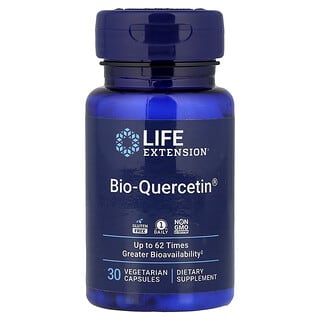 |
| Brand | Thorne | Life Extension |
| Form/Purity | High Purity Pharmaceutical Grade | High Purity Pharmaceutical Grade |
| Advantage | Products like Thorne's Quercetin Phytosome and Life Extension's Bio-Quercetin® utilize advanced delivery systems (e.g., phytosome technology) to significantly enhance the bioavailability and absorption of quercetin, which is critical for its efficacy as a senolytic agent. | The enhanced bioavailability ensures that a greater concentration of quercetin reaches target tissues to exert its senolytic effects, such as selectively inducing apoptosis in senescent cells and reducing their burden in various tissues. |
| Price | $46.00 | $9.00 |
| Link | Shop on iHerb | Shop on iHerb |
References & Academic Sources
- [2] The Achilles’ heel of senescent cells: from transcriptome to senolytic drugs.
- [3] TBD (From Blog Topics)
- [5] Senolytics improve physical function and increase lifespan in old age.
- [6] Tau protein aggregation is associated with cellular senescence in the brain.
- [8] Senolytic therapy alleviates Aβ-associated oligodendrocyte progenitor cell senescence and cognitive deficits in an Alzheimer’s disease model.
- [9] Quercetin Suppresses the Progression of Atherosclerosis by Regulating MST1-Mediated Autophagy in ox-LDL-Induced RAW264.7 Macrophage Foam Cells.
- [13] Senolytic drugs, dasatinib and quercetin, attenuate adipose tissue inflammation, and ameliorate metabolic function in old age.