The Scientific Hook
Chronic low-grade inflammation, often termed “inflammaging,” represents a critical driver in the pathophysiology of numerous age-related diseases, ranging from cardiovascular conditions to neurodegenerative disorders [1]. This insidious process is characterized by a persistent upregulation of pro-inflammatory cytokines and signaling pathways, significantly impacting cellular and tissue homeostasis [2]. Among the diverse array of natural compounds investigated for their anti-inflammatory potential, astaxanthin, a xanthophyll carotenoid primarily sourced from the microalga Haematococcus pluvialis, has emerged as a particularly potent agent. Its unique molecular structure confers exceptional antioxidant and anti-inflammatory properties, distinguishing it from other carotenoids like beta-carotene or lutein [1]. This review systematically examines the scientific basis for astaxanthin’s anti-inflammatory efficacy, detailing its molecular mechanisms, clinical evidence, and offering practical guidance for its integration into a comprehensive biohacking regimen focused on longevity.
Molecular Mechanisms & Cellular Longevity
Astaxanthin exerts its profound anti-inflammatory effects primarily through the modulation of critical intracellular signaling pathways involved in immune and inflammatory responses [1]. A cornerstone of its action is the direct or indirect downregulation of Nuclear Factor-kappa B (NF-κB), a master regulator of genes encoding pro-inflammatory cytokines, chemokines, and adhesion molecules [2]. By attenuating NF-κB activation, astaxanthin effectively curtails the transcriptional machinery responsible for the production of key inflammatory mediators such as Tumor Necrosis Factor-alpha (TNF-α), Interleukin-1 beta (IL-1β), and Interleukin-6 (IL-6) [1]. Furthermore, astaxanthin has been shown to inhibit the activation of other inflammatory pathways, including the mitogen-activated protein kinase (MAPK) cascades and the Janus kinase/signal transducer and activator of transcription (JAK/STAT) pathway, thereby offering a multi-targeted approach to inflammation control [2].
Beyond its direct impact on NF-κB, astaxanthin’s potent antioxidant capacity contributes significantly to its anti-inflammatory profile. It effectively quenches reactive oxygen species (ROS) and mitigates oxidative stress, which itself is a potent inducer of inflammatory pathways [1]. By protecting cellular components from oxidative damage, including lipids, proteins, and DNA, astaxanthin helps maintain cellular integrity and function, thereby promoting cellular longevity and reducing the burden of inflammaging [2]. This synergistic action of antioxidant and anti-inflammatory mechanisms underscores astaxanthin’s potential as a foundational supplement in strategies aimed at combating chronic low-grade inflammation and supporting healthy aging.
Clinical Evidence & Evidence-Based Benefits
The promising mechanistic insights regarding astaxanthin’s anti-inflammatory properties are increasingly supported by a growing body of clinical evidence. Human intervention studies have demonstrated astaxanthin’s ability to significantly reduce systemic inflammatory biomarkers. For instance, research indicates that supplementation with astaxanthin can lead to a measurable decrease in C-reactive protein (CRP), a widely recognized marker of inflammation, as well as reductions in levels of pro-inflammatory cytokines like IL-6 and TNF-α in various populations [2]. These reductions in inflammatory markers are critical, as elevated levels are associated with increased risk for chronic diseases.
Beyond generalized inflammatory markers, astaxanthin has shown specific benefits in conditions where inflammation plays a pivotal role. Clinical trials have reported improvements in joint pain and functional capacity in individuals with osteoarthritis, attributing these benefits to astaxanthin’s ability to suppress inflammatory mediators within the joint [1]. In the realm of cardiovascular health, studies suggest that astaxanthin can reduce oxidative stress and inflammation in the vasculature, potentially contributing to improved endothelial function and reduced atherosclerotic progression [2]. Furthermore, its ability to cross the blood-brain barrier and blood-retinal barrier enables potential neuroprotective and ocular health benefits, where inflammation and oxidative stress are implicated in neurodegenerative diseases and age-related macular degeneration [1]. These evidence-based outcomes solidify astaxanthin’s position as a valuable nutraceutical for broad-spectrum anti-inflammatory support.
Expert Protocol & Biohacker Tips
For individuals seeking to leverage astaxanthin’s anti-inflammatory benefits, adherence to an informed protocol is essential. The effective dosage for anti-inflammatory effects typically ranges from 4 mg to 12 mg per day. Higher doses, such as 10 mg or 12 mg, are often recommended for more pronounced anti-inflammatory or antioxidant effects, particularly in individuals experiencing elevated inflammatory states or specific conditions [1]. It is crucial to note that astaxanthin is fat-soluble, meaning its absorption is significantly enhanced when consumed with a meal containing dietary fats. Therefore, taking astaxanthin softgels with the largest meal of the day or alongside healthy fats (e.g., avocado, olive oil) is recommended for optimal bioavailability [2].
When considering commercially available options, quality and source are paramount. Natural astaxanthin derived from Haematococcus pluvialis is superior to synthetic variants due to its unique isomer profile and enhanced bioactivity [1]. Brands such as Jarrow Formulas and NOW Foods are reputable manufacturers known for their commitment to quality and transparency. Jarrow Formulas, Astaxanthin, 12 mg, 30 Softgels offers a higher dose in a single softgel, which can be convenient for those targeting the upper end of the therapeutic range. NOW Foods provides options at different dosages: Astaxanthin, 4 mg, 60 Veggie Softgels, suitable for maintenance or lower-dose protocols, and Astaxanthin, 10 mg, 60 Softgels, offering a robust intermediate dose. Both NOW Foods options provide a higher count of softgels, potentially offering greater value over time.
For an advanced biohacker protocol, consistent daily supplementation is key. Monitoring inflammatory markers, such as high-sensitivity C-reactive protein (hs-CRP), before and after several weeks of supplementation can provide objective data on efficacy. Combining astaxanthin with other anti-inflammatory strategies, including a diet rich in omega-3 fatty acids and polyphenols, regular physical activity, and adequate sleep, will create a synergistic environment for optimal inflammatory modulation [2].
The AgingHack Vetted Selection
| Selection | Astaxanthin | Vetted Choice | Vetted Choice |
|---|---|---|---|
| Visual | 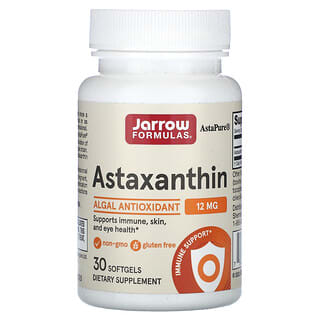 |  |  |
| Brand | Jarrow Formulas | NOW Foods | NOW Foods |
| Form/Purity | High Purity Pharmaceutical Grade | High Purity Pharmaceutical Grade | High Purity Pharmaceutical Grade |
| Advantage | Jarrow Formulas, Astaxanthin, 12 mg, 30 Softgels: Offers a high dose per softgel, suitable for individuals seeking maximum anti-inflammatory support in a convenient single dose. | NOW Foods, Astaxanthin, 4 mg, 60 Veggie Softgels: Provides a lower, foundational dose in a vegetarian softgel, ideal for daily maintenance or those sensitive to higher dosages, with good value due to higher count. | NOW Foods, Astaxanthin, 10 mg, 60 Softgels: Delivers a robust intermediate dose, striking a balance between potency and value, suitable for comprehensive anti-inflammatory protocols over an extended period. |
| Price | $25.69 | $12.23 | $24.48 |
| Link | Shop on iHerb | Shop on iHerb | Shop on iHerb |