The Scientific Hook
Cellular aging is a complex biological process characterized by a gradual decline in cellular functions and an increased susceptibility to age-related diseases [14]. A key pathway implicated in modulating the aging process involves sirtuins, a family of NAD+-dependent protein deacetylases that are conserved across diverse organisms [1]. In Saccharomyces cerevisiae, calorie restriction, a known intervention to extend lifespan, operates by augmenting the activity of Sir2, a yeast sirtuin [1]. Similarly, the human homologue, SIRT1, promotes cell survival and is central to longevity mechanisms [1]. Small molecules capable of activating sirtuins have garnered significant scientific interest [1]. Among these, resveratrol, a polyphenol naturally occurring in red wine, has been identified as a potent sirtuin activator [1]. Research indicates that resveratrol can mimic the effects of calorie restriction, stimulating Sir2 activity in yeast, enhancing DNA stability, and extending lifespan by up to 70% [1]. Furthermore, resveratrol is widely recognized for its potential to mitigate the adverse effects of aging and increase the lifespan of various model organisms, primarily through its activation of SIRT1 [14].
Molecular Mechanisms & Cellular Longevity
Resveratrol exerts its profound effects on cellular longevity through multiple molecular mechanisms, primarily revolving around the activation of sirtuin pathways. Mechanistically, resveratrol has been shown to lower the Michaelis constant of SIRT1 for both its acetylated substrate and NAD+, thereby increasing its catalytic efficiency [1]. This activation leads to enhanced SIRT1-dependent deacetylation of critical cellular proteins, such as the p53 tumor suppressor, which in turn promotes cell survival [1].
Beyond direct sirtuin activation, resveratrol modulates several hallmarks of aging. It plays a role in regulating oxidative stress, energy metabolism, nutrient sensing, and epigenetics [14]. The polyphenol has been demonstrated to protect against oxidative damage, reduce inflammation, mitigate telomere attrition, and combat cellular senescence [11]. A crucial aspect of cellular health and longevity is autophagy, a process of cellular self-cleansing and recycling. SIRT1 activation robustly promotes autophagy [16]. Resveratrol itself activates autophagy by regulating the AMP-activated protein kinase (AMPK) pathway [18]. Specifically, SIRT1 facilitates autophagy by deacetylating Beclin1 at specific lysine residues (K430 and K437), a mechanism that has been shown to protect against conditions such as sepsis-induced acute kidney injury [16]. Furthermore, resveratrol reduces the production of reactive oxygen species (ROS), inhibits apoptosis, and aids in restoring normal cell cycle function, contributing to its anti-aging properties [18].
Clinical Evidence & Evidence-Based Benefits
The beneficial effects of resveratrol extend from cellular and organismal models to demonstrate potential relevance for human health, particularly in the context of age-related diseases. Numerous studies indicate that polyphenols, including resveratrol and pterostilbene, offer protective effects against a spectrum of age-related pathologies such as atherosclerosis, cardiovascular disease, cancer, arthritis, cataracts, osteoporosis, type 2 diabetes, hypertension, and Alzheimer’s disease [11]. These compounds modulate key aging biomarkers, including oxidative stress and inflammation, and exhibit positive effects on lifespan and overall health maintenance [11].
Specific disease models further illustrate resveratrol’s therapeutic potential. For instance, SIRT1 activators, including resveratrol, have been shown to attenuate sepsis-induced acute kidney injury by promoting autophagy through Beclin1 deacetylation [16]. In dermatological contexts, resveratrol offers protective effects against ultraviolet A (UVA)-induced photoaging. Studies in human skin fibroblasts and male mouse models demonstrate that resveratrol activates autophagy via the AMPK pathway, leading to reduced ROS production and inhibited apoptosis [18]. Clinically relevant observations in these models include improvements in skin roughness, erythema, and wrinkle formation, alongside a reduction in epidermal hyperkeratosis, hyperpigmentation, inflammatory responses, and collagen fiber degradation [18]. These findings underscore resveratrol’s potential as a therapeutic strategy for preventing or treating various age-related conditions by modulating the underlying aging mechanisms [11, 14, 18].
Expert Protocol & Biohacker Tips
For individuals seeking to leverage the longevity-enhancing potential of sirtuin activation, the strategic integration of high-purity trans-resveratrol supplements warrants consideration. The focus on trans-resveratrol is critical, as this isomer is recognized for its biological activity and stability [1]. Products such as Doctor’s Best Trans-Resveratrol, available in dosages of 100 mg, 200 mg, and 600 mg, provide flexible options for targeted supplementation. The appropriate dosage may vary depending on individual health goals and physiological responses, necessitating a personalized approach guided by professional advice.
For optimal absorption, trans-resveratrol is often recommended to be taken with a meal containing some fat [11]. Combining trans-resveratrol with other synergistic compounds, where appropriate and evidence-based, may amplify its effects; however, focus should remain on the primary mechanism of SIRT1 activation [1, 14]. Integrating trans-resveratrol into a broader biohacking strategy for cellular health could involve pairing it with other interventions known to support mitochondrial function and DNA repair. Regular monitoring of relevant biomarkers, if feasible, can help assess the efficacy of supplementation and refine the protocol. Given the substantial body of research supporting resveratrol’s role in modulating oxidative stress, inflammation, and cellular senescence, consistent and judicious supplementation with high-purity formulations can be a valuable component of an advanced longevity regimen [11, 14, 18].
The AgingHack Vetted Selection
| Selection | Sirtuin Activators | NAD+ Boosters | Polyphenol Supplements |
|---|---|---|---|
| Visual | 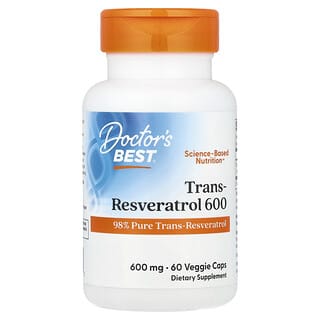 |  |  |
| Brand | Doctor's Best | Doctor's Best | Doctor's Best |
| Form/Purity | High Purity Pharmaceutical Grade | High Purity Pharmaceutical Grade | High Purity Pharmaceutical Grade |
| Advantage | Activates SIRT1 pathways, promoting cellular longevity and survival [1, 14]. | Enhances mitochondrial function and DNA repair mechanisms [1, 14]. | Modulates key hallmarks of aging, including oxidative damage, inflammation, telomere attrition, and cellular senescence [11, 14]. |
| Price | $40.99 | $23.99 | $17.99 |
| Link | Shop on iHerb | Shop on iHerb | Shop on iHerb |
References & Academic Sources
- [1] Small molecule activators of sirtuins extend Saccharomyces cerevisiae lifespan.
- [3] TBD (From Blog Topics)
- [4] TBD (From Blog Topics)
- [5] TBD (From Blog Topics)
- [6] TBD (From Blog Topics)
- [7] TBD (From Blog Topics)
- [9] TBD (From Blog Topics)
- [11] Effect of resveratrol and pterostilbene on aging and longevity.
- [14] Mechanisms of Aging and the Preventive Effects of Resveratrol on Age-Related Diseases.
- [15] TFEB Biology and Agonists at a Glance.
- [16] SIRT1 attenuates sepsis-induced acute kidney injury via Beclin1 deacetylation-mediated autophagy activation.
- [18] Resveratrol activates autophagy and protects from UVA-induced photoaging in human skin fibroblasts and the skin of male mice by regulating the AMPK pathway.